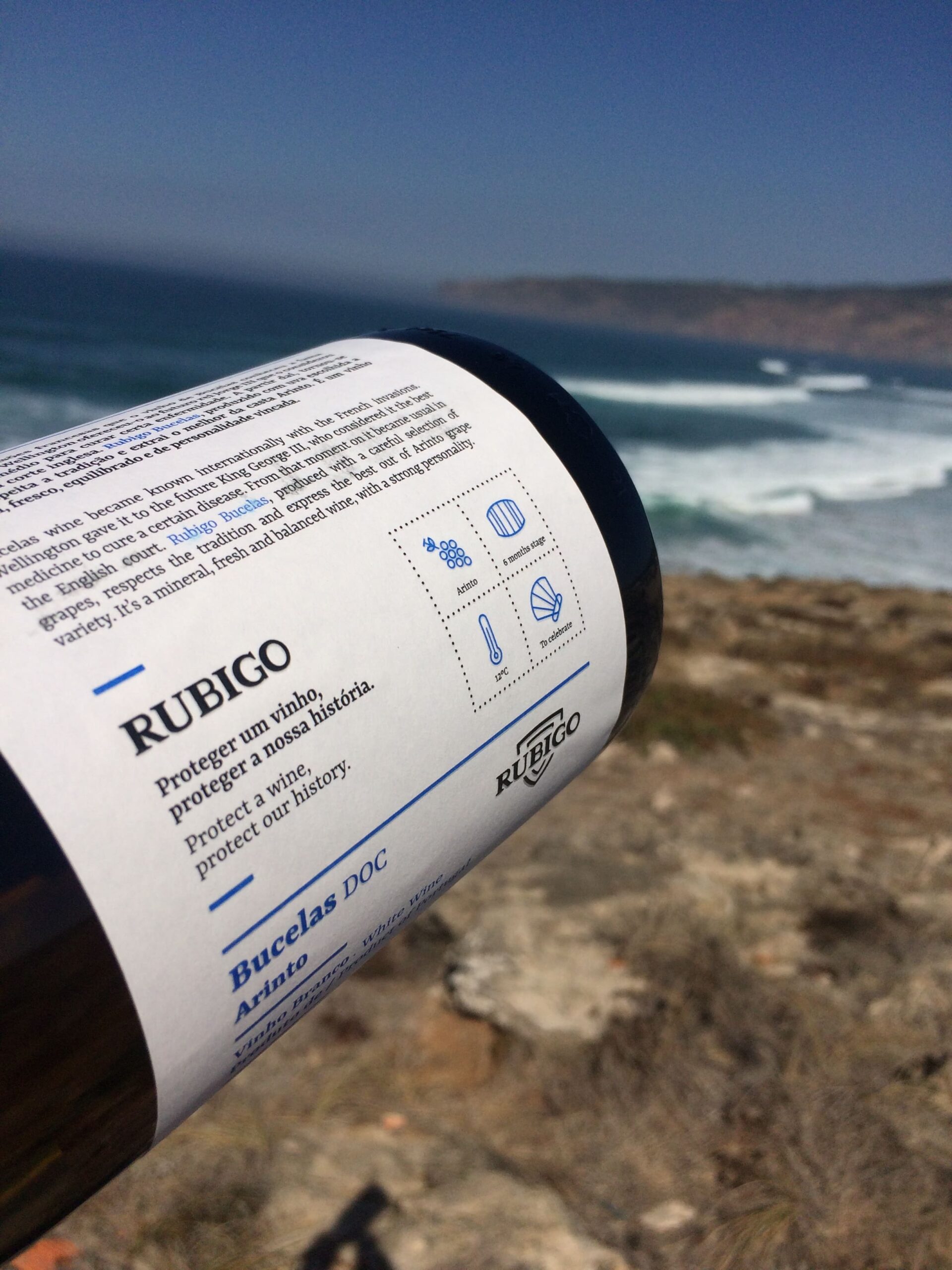


Arinto de Bucelas: the grape variety that defines a region
Some grape varieties can be found across different regions. Others seem to have found their most distinctive expression in one particular place.
Arinto de Bucelas clearly belongs to the latter.
Although Arinto is one of Portugal’s most important white grape varieties and is grown in several regions across the country, it is in Bucelas, on the slopes of the Trancão River valley, that it has found one of its most recognised expressions. Here, the climate, soils and proximity to the Atlantic create particularly favourable conditions for wines of great freshness, acidity and ageing potential.
But the story of Arinto de Bucelas is about more than viticulture.
It is also the story of a wine that crossed borders, won admirers in England and reached the English court. During the Peninsular War, the future Duke of Wellington discovered the wines of Bucelas and took them back to England, helping to establish their international reputation.
More than two centuries later, Arinto remains at the heart of Bucelas’ identity.
What is Arinto?
Arinto is an indigenous Portuguese white grape variety, grown in several regions of the country, but with particular prominence in the Bucelas PDO.
From an oenological perspective, it is a particularly interesting variety because of its ability to retain naturally high acidity. Arinto wines generally show a bright citrus colour, citrus aromas and, in some cases, mineral notes, together with a recognised capacity for ageing.
It is precisely this combination of freshness, acidity and ageing potential that makes Arinto one of Portugal’s most important white grape varieties.
In Bucelas, the grape takes on an additional territorial dimension.
The specifications of the Bucelas PDO establish Arinto as the region’s principal grape variety, accounting for at least 75% of the composition of wines bearing the designation. Other authorised varieties include Esgana-Cão (Sercial) and Rabo-de-Ovelha.
So when we speak of Arinto de Bucelas, we are not simply talking about a grape variety.
We are talking about the relationship between a grape variety and a place.
What are the characteristics of Arinto de Bucelas?
The first word that best defines a good Arinto is freshness.
The grape’s natural acidity gives the wines energy and tension, making them particularly well suited to food and allowing them to evolve over time.
Depending on the terroir, harvest date and winemaking process, Arinto can reveal different aromatic and flavour dimensions, but it is common to find:
- citrus and white fruit notes;
- a mineral expression;
- pronounced freshness;
- firm, well-balanced acidity;
- persistence on the palate;
- ageing potential.
The last of these characteristics deserves particular attention.
A quality Arinto is not necessarily a wine intended to be consumed only in the year of harvest. Its acidic structure allows it to evolve and gain complexity over time — a characteristic documented both for the grape variety and for the traditional wines of Bucelas.
This is one of the reasons why great Arintos from Bucelas can still surprise after several years in bottle.
Why does Arinto thrive in Bucelas?
To understand Arinto de Bucelas, we need to look at the land itself.
The Bucelas wine region lies in the Trancão River valley, north of Lisbon. The vineyards are mainly planted on the slopes that follow the valley and benefit from a distinctive microclimate, with relatively cool winters and temperate summers.
The region’s traditional soils are associated with the so-called “caeiras”, predominantly composed of marl and hard limestone. Current legislation identifies these soils as particularly suitable for the production of wines with Bucelas PDO status.
This combination is at the heart of Bucelas’ character.
On one side, a climate that helps preserve the freshness of the grapes. On the other, a geological setting shaped by marl and limestone. And at the centre of it all, a grape variety naturally inclined to retain its acidity.
The result is a style of wine that can combine freshness, tension, minerality and ageing potential.
That is why it makes sense to think of Bucelas not simply as a place where Arinto is grown, but as a territory where Arinto has found its own distinctive expression.
Bucelas: a centuries-old wine history
Bucelas has a long-standing relationship with vines and wine.
Over the centuries, the region’s wines gained recognition well beyond the place where they were produced. The IVV even records historical references to Bucelas wine under the name “Lisbon Hock”, associating it with the great European white wines.
But it was at the beginning of the 19th century that Bucelas experienced one of the most important moments in its history.
The French Invasions and the Peninsular War brought thousands of British soldiers into contact with Portuguese wines. Among their admirers was Arthur Wellesley, the future Duke of Wellington.
And Wellington did more than simply enjoy the wine.
Wellington and Bucelas wine at the English court
According to the Portuguese Institute of Vine and Wine (IVV), Wellington valued Bucelas wine so highly that he took it as a gift to the then Prince Regent, who would later become George III of England.
After the Peninsular War, Bucelas wine became a regular presence at the English court.
It is a particularly fascinating episode in the history of Portuguese wine.
A wine produced in a relatively small region on the outskirts of Lisbon had found its way into British aristocratic circles and earned an international reputation.
The story also helps explain why Bucelas should not be seen merely as a small Portuguese wine region.
Bucelas already had an international history long before Portuguese wine became a global category.
The international reputation of Arintos from Bucelas
The historical success of Bucelas wines did not happen by chance.
Arinto’s ability to retain acidity and freshness helped produce white wines with structure, character and ageing potential — qualities that were particularly important at a time when wines had to withstand long journeys and storage.
Its identity became distinctive enough for the name Bucelas to come to represent a style of white wine in its own right.
That reputation would eventually receive formal protection.
The Bucelas Denominação de Origem Controlada has a history spanning more than a century, with the delimitation and recognition of the region dating back to the beginning of the 20th century. Today, the Bucelas PDO is reserved for white and sparkling white wines that comply with its production requirements.
And at the heart of that designation, Arinto remains.
Can Arinto de Bucelas age?
Yes. And this is one of the characteristics that makes the grape variety particularly interesting.
Arinto’s natural acidity acts as a structural backbone, allowing the wine to evolve without easily losing its freshness.
A young Arinto may stand out for its citrus character, vibrancy and freshness. Over time, it can develop greater aromatic complexity and a deeper expression while retaining the tension that defines the variety.
The historic wines of Bucelas are, in fact, an important reference for the ageing potential of the region’s finest white wines. The IVV itself highlights the possibility of cellaring Bucelas wines for several years and discovering how they evolve in bottle.
This is one of the qualities that places Arinto among the Portuguese white grape varieties with the greatest ageing potential.
Rubigo Bucelas: preserving a legacy
It is within this land and this history that Rubigo Bucelas finds its place.
Rubigo was born from a simple idea: to reveal the best of Portugal’s regions and grape varieties, while preserving the memory of the places where its wines are made.
In Bucelas, this mission takes on a special meaning.
Arinto is not simply the region’s predominant grape variety. It is part of its identity and of a story that has spanned centuries and reached far beyond Portugal.
Rubigo Bucelas seeks to preserve this legacy through a contemporary interpretation of Arinto de Bucelas, celebrating the freshness, elegance and ageing potential that make this region so distinctive.
A wine rooted in a place.
A grape variety with a story of its own.
And a legacy worth carrying forward.
Discover Rubigo Bucelas
Discover the wine that seeks to preserve the identity of Bucelas and the story of its Arinto.
Arinto de Bucelas: a grape variety rooted in its territory
To speak of Arinto de Bucelas is to speak of a grape variety, but it is also to speak of a place.
It is to speak of the slopes of the Trancão, of marl and limestone, of Bucelas’ distinctive climate and of the acidity that gives Arinto its identity.
It is to speak of wines that reached the English court through Wellington and, more than two centuries ago, earned a place in the international history of Portuguese wine.
And it is to speak of a tradition that continues today.
Because the true heritage of a wine is not only found in what happened in the past.
It lies in the ability to give that past meaning through every new bottle.
Frequently asked questions about Arinto de Bucelas
What is Arinto de Bucelas?
Arinto de Bucelas is wine produced in the Bucelas region with Arinto as its principal grape variety. Under the rules of the Bucelas PDO, Arinto must account for at least 75% of the wine’s composition.
Is Arinto a Portuguese grape variety?
Yes. Arinto is an indigenous Portuguese white grape variety, grown in several regions of the country and with particular prominence in the Bucelas PDO.
What are the main characteristics of Arinto?
Arinto is characterised above all by its freshness and natural acidity. It can display citrus and mineral aromas, together with good ageing potential.
Why is Bucelas so important for Arinto?
Bucelas offers particularly favourable conditions for the expression of Arinto, including its distinctive microclimate, Atlantic influence, location on the slopes of the Trancão valley, and soils traditionally associated with marl and limestone.
Did Wellington take Bucelas wine to England?
According to the Portuguese Institute of Vine and Wine (IVV), the future Duke of Wellington was a great admirer of Bucelas wine and took it as a gift to the then Prince Regent, the future George III. After the Peninsular War, the wine became a regular presence at the English court.
Can Arinto de Bucelas age?
Yes. Arinto’s naturally high acidity contributes to the ageing potential of its wines, which can develop greater complexity over time.